Discount supermarkets make trade mark push

Managing IP is part of Legal Benchmarking Limited, 1-2 Paris Gardens, London, SE1 8ND

Copyright © Legal Benchmarking Limited and its affiliated companies 2025

Accessibility | Terms of Use | Privacy Policy | Modern Slavery Statement

Discount supermarkets make trade mark push

supermarkets-55.jpg

Discount supermarket chains may be associated with trade marks for all the wrong reasons, but new figures suggest they have been busy filing marks of their own

Supermarket trade marks

Many brand owners have become increasingly concerned about the way that some discount chains, including Aldi and Lidl, use so-called lookalike packaging to sell their own versions of market-leading products (Aldi famously used the tagline “Like brands. Only cheaper” in one of its advertising campaigns).

But figures published by law firm RPC show that discount supermarkets filing far more trade marks for new products than their market share would suggest.

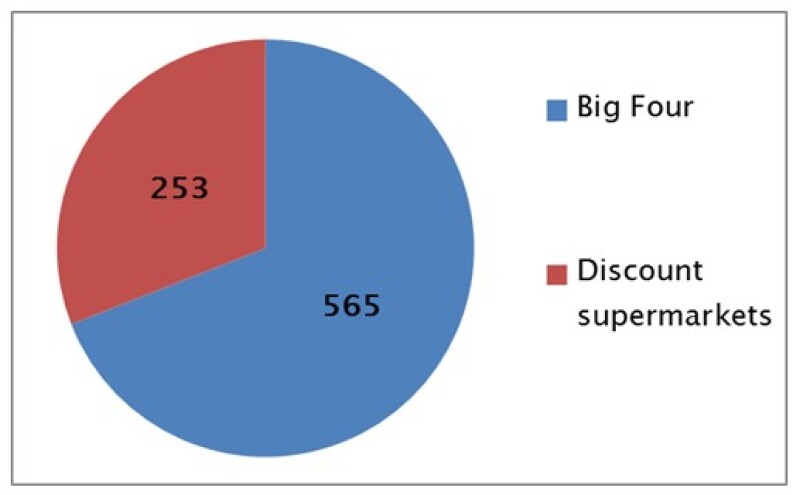
RPC says that Aldi and Lidl have registered 253 trade marks in the UK in the past five years – almost half as many as the 565 trade marks registered by their big four rivals (Tesco, Asda, Sainsbury’s and Morrisons), despite having a combined market share of just 8% compared to 73% for the big four.

The discount supermarkets also outperformed in registering Community trade marks, with Aldi and Lidl registering 112 trade marks in 2013, compared to just 40 trade marks registered by their big four rivals.

The trend reflects the rapidly changing grocery market in the UK, which is seeing the country’s large supermarket chains battling for market share with so-called hard discounters.

RPC’s Jeremy Drew, who heads the firm’s retail team, said that the data suggests that the discount supermarkets’ new product brand pipeline is running at a faster rate than that of their bigger rivals.

“Within discount retailers in particular the growth of own brand products, which often appear as if they are independent brands, can protect or increase margins and reflect innovation to meet consumer demand.”

“In retail, sometimes being able to develop a new product line quickly can be just as important as having a large number of different product lines on the shelf already.”

You can read more about litigation between brand owners and supermarkets in Managing IP, including an IP Clinic offering advice on dealing with lookalikes sold by discount stores.

more from across site and SHARED ros bottom lb

More from across our site

The tie-up could result in the firm’s German and France-based teams, which both have strong UPC expertise, becoming independent
News of a slowdown in the UK’s clean energy IP landscape and an EPO report on unitary patent uptake were also among the top talking points
Price hikes at ‘big law’ firms are pushing some clients toward boutiques that offer predictable fees, specialised expertise, and a model built around prioritising IP
The Australian side, in particular, can benefit by capitalising on its independent status to bring in more work from Western countries while still working with its former Chinese partner
Koen Bijvank of Brinkhof and Johannes Heselberger of Bardehle Pagenberg discuss the Amgen v Sanofi case and why it will be cited frequently
View the official winners of the 2025 Social Impact EMEA Awards
King & Wood Mallesons will break into two entities, 14 years after a merger between a Chinese and an Australian firm created the combined outfit
Teams from Shakespeare Martineau and DWF will take centre stage in a dispute concerning the registrability of dairy terminology in plant-based products
Senem Kayahan, attorney and founder at PatentSe, discusses how she divides prosecution tasks, and reveals the importance of empathetic client advice
The association’s Australian group has filed a formal complaint against the choice of venue, citing Dubai as an unsafe environment for the LGBTQIA+ community
Gift this article