Knitted trainers a sign of the future

Managing IP is part of Legal Benchmarking Limited, 1-2 Paris Gardens, London, SE1 8ND

Copyright © Legal Benchmarking Limited and its affiliated companies 2025

Accessibility | Terms of Use | Privacy Policy | Modern Slavery Statement

Knitted trainers a sign of the future

Case of the Year 2012: Nike v Adidas

flyknit.jpg

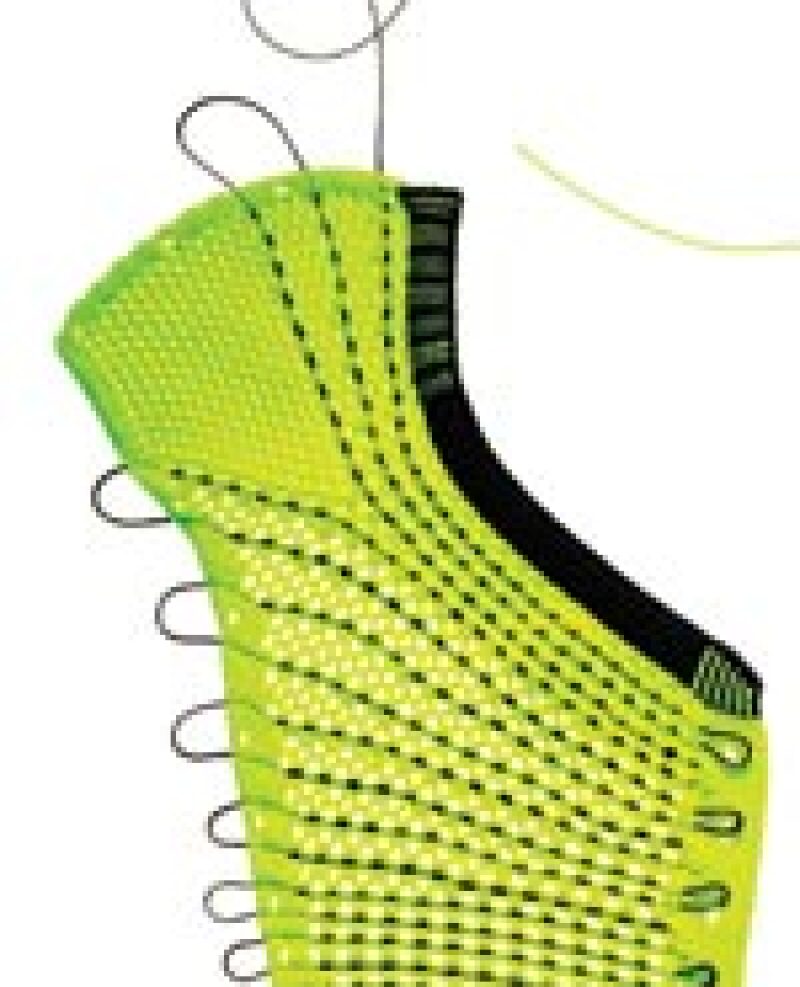
Sportswear manufacturers own a lot of patents, but rarely sue each other. "It's just like the car industry here," says a German patent lawyer. "Generally they cross-license, settle or learn to live with the infringement. It is not litigious." A case between Nike and adidas might see that change in the sportswear industry. Both companies sell a shoe made with a knitted upper part to it – to increase flexibility and reduce the number of seams needed. Nike introduced its first, the Flyknit, at the beginning of 2012 and adidas followed a few months later with the Primeknit.

Nike sued adidas in Germany for infringing a European patent covering the knitting process (which involves melting the polymer material slightly), and won an ex parte injunction in September. That was lifted the following month, though Nike says it will continue with the case.

As sportswear companies begin to include more technology in their products – including innovative materials, chemical compounds and apps that analyse your workout – this could prove to be the first battle in a long patent war.

This case was selected as one of Managing IP’s Cases of the Year for 2012.

To see the rest, click on one of the cases below.

The 10 cases of the year

A fillip for the EU pharmaceutical sector

Relief for trade mark owners in red sole saga

Australian TV streaming service held to be illegal

Smartphone war hits front page in the US

Liberalising the EU’s software market

India allows parallel imports

Victory for fair dealing in Canada

Lacoste loses its trade mark in China

Google prevails in Android attack

EU test case clarifies class headings

Ten you might have missed

Canada: Ambiguous claims can invalidate patents

Russia: Certainty on parallel imports

Italy: TV formats win copyright for the first time

First FRAND cases litigated worldwide

Monsanto loses in Brazil

Data exclusivity backed by Mexican courts

China: A shift over OEM manufacturing

Authors in the US able to reclaim joint copyrights

Germany: Knitted trainers a sign of the future

India: Financial Times loses trade mark

more from across site and SHARED ros bottom lb

More from across our site

The tie-up could result in the firm’s German and France-based teams, which both have strong UPC expertise, becoming independent
News of a slowdown in the UK’s clean energy IP landscape and an EPO report on unitary patent uptake were also among the top talking points
Price hikes at ‘big law’ firms are pushing some clients toward boutiques that offer predictable fees, specialised expertise, and a model built around prioritising IP
The Australian side, in particular, can benefit by capitalising on its independent status to bring in more work from Western countries while still working with its former Chinese partner
Koen Bijvank of Brinkhof and Johannes Heselberger of Bardehle Pagenberg discuss the Amgen v Sanofi case and why it will be cited frequently
View the official winners of the 2025 Social Impact EMEA Awards
King & Wood Mallesons will break into two entities, 14 years after a merger between a Chinese and an Australian firm created the combined outfit
Teams from Shakespeare Martineau and DWF will take centre stage in a dispute concerning the registrability of dairy terminology in plant-based products
Senem Kayahan, attorney and founder at PatentSe, discusses how she divides prosecution tasks, and reveals the importance of empathetic client advice
The association’s Australian group has filed a formal complaint against the choice of venue, citing Dubai as an unsafe environment for the LGBTQIA+ community
Gift this article
